
Rope Access Rescue Training: Building Safer, Faster, and More Effective Work-at-Height Operations
Working at height is a highly critical component of several industries, including construction, oil and gas, wind energy, telecommunications, industrial maintenance, and infrastructure inspection. While rope access techniques have revolutionized how technicians reach challenging work environments, safety remains the top priority. This is where rope access rescue training becomes essential.
A well-trained rescue team with rope access can make the difference between a controlled emergency response and a life-threatening situation. Organizations that invest in comprehensive rescue training not only improve worker safety but also enhance compliance, operational efficiency, and overall risk management.
What Is Rope Access Rescue Training?
Rope access rescue training is a specialized program designed to teach workers how to safely respond to emergencies involving personnel suspended on ropes or working in difficult-to-reach locations. The training focuses on rescue procedures, emergency planning, equipment management, casualty handling, and effective communication during critical situations.
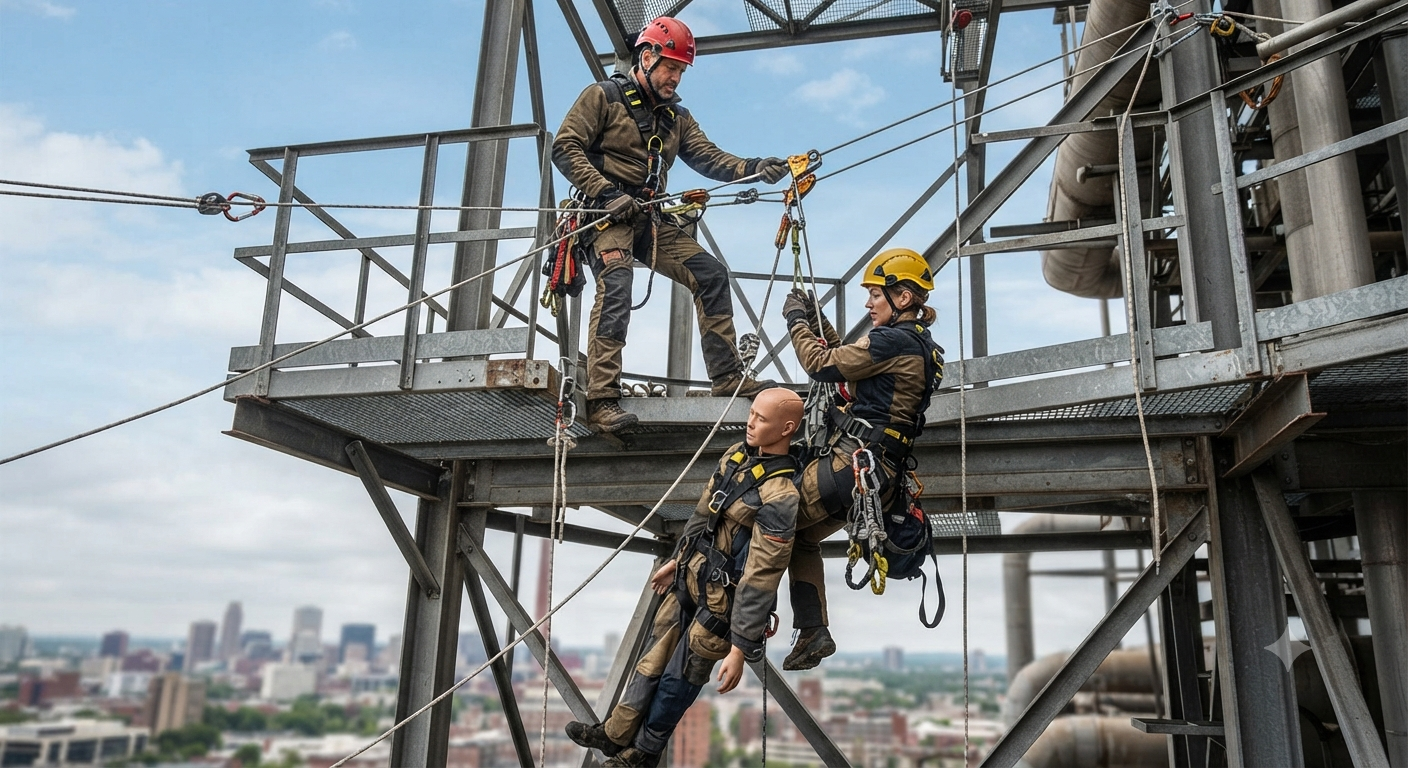
Unlike general fall protection courses, rescue training addresses real-world emergency scenarios that can occur during rope access operations. Participants learn how to assess risks, deploy rescue systems, perform pick-offs, conduct lowering and raising operations, and evacuate injured workers safely.
The primary goal is to ensure that rescue procedures can be executed quickly and efficiently while minimizing additional risk to both the casualty and the rescue team.
Why Rope Access Rescue Training Matters
Every industry that operates at height faces potential hazards. Although preventive measures significantly reduce incidents, emergencies can still occur due to equipment failure, medical issues, environmental conditions, or human error.
One of the most critical concerns is suspension trauma. When a worker remains suspended in a harness for an extended period, circulation can become impaired, potentially leading to serious medical complications. Rapid rescue is therefore essential.
Proper rope access rescue training helps organizations:
- Improve worker safety and confidence
- Reduce rescue response times
- Meet industry regulations and safety standards
- Minimize project disruptions
- Strengthen emergency preparedness
- Lower operational risks and liabilities
Employers who prioritize rescue readiness demonstrate a strong commitment to workplace safety and regulatory compliance.
Key Components of Rope Access Rescue Training
A high-quality rescue training program covers a wide range of theoretical and practical competencies.
1. Rescue Planning
Before any rope access work begins, a rescue plan should already be in place. Training teaches participants how to:
- Identify site-specific hazards
- Evaluate rescue challenges
- Develop emergency procedures
- Select appropriate rescue equipment
- Assign rescue team responsibilities
Planning is often the most important step because effective rescues depend on preparation rather than improvisation.
2. Equipment Familiarization
Rescue personnel must understand the proper use of all equipment involved in emergency operations.
This typically includes:
- Harnesses
- Descenders
- Ascenders
- Pulleys
- Rescue kits
- Tripods
- Rope systems
- Connectors and anchor devices
Training emphasizes equipment inspection, maintenance, and deployment under emergency conditions.
3. Patient Assessment and Handling
Rescuers are trained to evaluate the condition of an injured worker before and during evacuation. This includes:
- Initial casualty assessment
- Suspension trauma awareness
- Stabilization techniques
- Safe movement procedures
- Communication with emergency responders
Effective casualty management reduces the risk of further injury during the rescue process.
4. Rescue Techniques
Practical rescue exercises form the foundation of rope access rescue training. Common techniques include:
- Pick-off rescues
- Counterbalance rescues
- Raise and lower systems
- Assisted descent rescues
- Confined space rescues
- Horizontal and vertical evacuations
Hands-on practice ensures rescuers can perform under pressure while maintaining control and safety.
Industries That Benefit from Rope Access Rescue Training
The demand for qualified rope rescue professionals continues to grow across multiple sectors.
Construction
High-rise construction projects often require access to elevated areas where traditional scaffolding may not be practical. Rescue-trained technicians can respond quickly to incidents occurring on suspended platforms, building facades, and structural elements.
Wind Energy
Wind turbine technicians operate hundreds of feet above the ground. Emergency evacuation from turbine towers requires specialized rescue skills and equipment. Comprehensive rescue training is a key safety requirement within the renewable energy sector.
Oil and Gas
Refineries, offshore platforms, and industrial processing facilities frequently rely on rope access methods for inspections and maintenance. Rescue capabilities help organizations protect workers in complex and potentially hazardous environments.
Telecommunications
Tower climbers routinely work at significant heights while maintaining communication infrastructure. Emergency rescue readiness is vital for ensuring worker safety during installation and maintenance activities.
Industrial Maintenance
Factories, power plants, bridges, and other industrial facilities often require access to difficult locations. Rescue-trained personnel help maintain safe operations while supporting productivity.
Building a Culture of Rescue Readiness
Rescue training should not be viewed as a one-time certification. Skills can diminish over time without regular practice and refresher training.
Creating a culture of readiness ensures teams remain prepared for unexpected situations and can respond effectively when emergencies occur.
Conclusion
As industries increasingly rely on rope access methods for maintenance, inspection, and construction work, the importance of rope access rescue training continues to grow. Effective rescue preparation protects workers, supports compliance, and strengthens overall operational safety.
Investing in professional rescue training is not simply a regulatory requirement; it is a strategic decision that can save lives, reduce risk, and enhance organizational performance. Whether operating on wind turbines, industrial facilities, telecommunications towers, or high-rise structures, companies need rescue-ready personnel who can respond confidently and efficiently when every second matters.
If you’re looking for professional, industry-focused rope access rescue training, visit Vertical Academy and explore their specialized training programs. Learn more and get started today at https://verticalacademy.us/.